Texfill – Circular Textile Flows and Material Challenges
Can recycled textiles become the furniture industry's next circular resource? Explore the systems, logistics, and innovations needed to make TexFill work at scale.
Client
Sustainable Development Skåne is a non-profit regional collaboration organization that works to promote ecological, social, and economic sustainability in the Skåne region of Sweden. Its work is carried out through projects, networks, and partnerships involving more than 80 member organizations. The organization focuses on bringing stakeholders together, driving joint initiatives, and developing practical solutions in areas such as sustainable food systems, circular resource flows, social sustainability, and public procurement.
Background
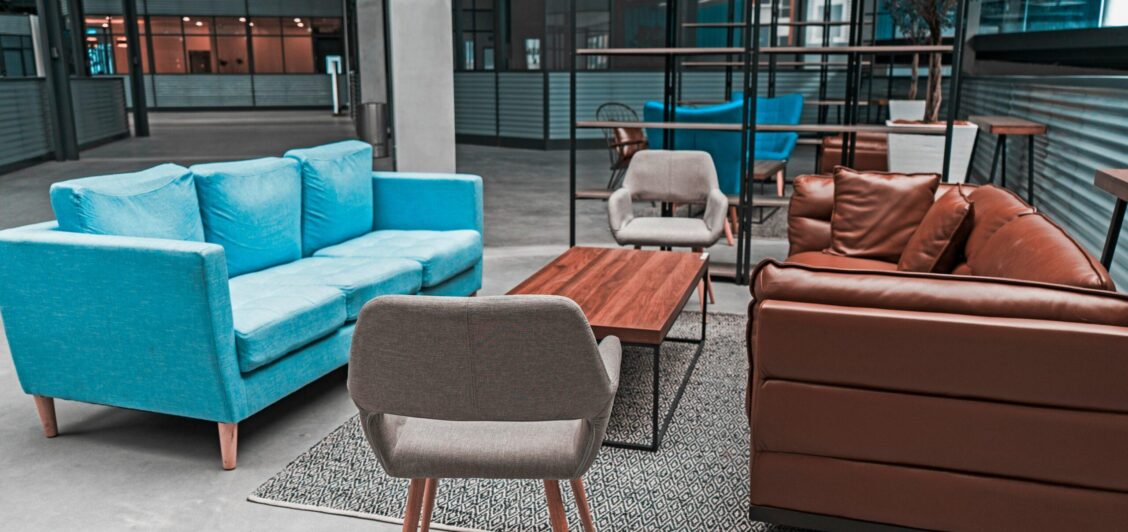
| TexFill is an innovation initiative exploring whether low‑value second‑hand textiles — such as knitted garments that cannot be resold due to damage, stains or fibre composition — can be mechanically processed into new upholstery materials for furniture. Textiles from Erikshjälpen’s collection streams have been sorted, shredded and transformed at The Loop Factory into materials that Swedese has tested in real furniture prototypes, including a sofa and a padded chair. Early results show strong potential to replace fossil‑based materials currently used as lining, reinforcement layers and comfort padding in furniture. The project has received positive feedback from industry experts, and materials such as Svep and Förstärkning were highlighted as promising. At the same time, further development is needed regarding form stability, durability, traceability and consistent quality at scale |
Task
| For TexFill to become a viable circular material flow, a range of technical, economic, logistical, environmental, and regulatory challenges need to be addressed.
Mechanical shredding of textiles is currently not available in Sweden, meaning materials may need to be transported to facilities in other European countries. This raises broader questions about environmental performance, economic viability, supply chain design, traceability, and the conditions required for circular textile systems to scale. The challenge therefore extends beyond the material itself. It involves interactions between waste collection, processing infrastructure, transport systems, furniture manufacturers, procurement requirements, regulations, and market demand. Project partners seek better decision-support to understand what enables or constrains the long-term development of circular textile flows within the furniture industry. Students are encouraged to define and justify their own analytical focus. The challenge can be explored from several perspectives, and these may be combined within a broader systems analysis. Material Flows, Transport and Scaling How do logistics and transport influence the environmental and economic viability of TexFill? Possible areas of exploration may include transport requirements, geographical location of processing facilities, scaling effects, climate impacts, and comparisons with conventional material supply chains. Traceability, Quality and Regulation What challenges and opportunities arise when integrating recycled textile materials into procurement systems and commercial markets? Relevant aspects may include traceability, material quality, safety requirements, documentation, stakeholder expectations, and emerging regulations such as Digital Product Passports. System Dynamics and Circular Transition What factors enable or constrain the development of circular textile flows? Potential areas of exploration include relationships between actors, economic incentives, system dependencies, feedback effects, trade-offs between sustainability goals, and opportunities for systemic change. Outcome The project will explore the TexFill challenge from a systems perspective, identifying key actors, relationships and material flows, as well as important barriers, opportunities and uncertainties. Based on a chosen area of focus, the project will provide insights into how the system can be strengthened and support more circular textile flows. |
Related Sustainability Goals


Emma Brodén
emma@sustainalink.se
0760-345141