Comparative Analysis of Environmental and Climate Impacts of Battery Energy Storage Solutions
Analyze how the use of unused batteries can reduce climate impact, conserve critical raw materials, and contribute to a more circular future for energy storage.
Client
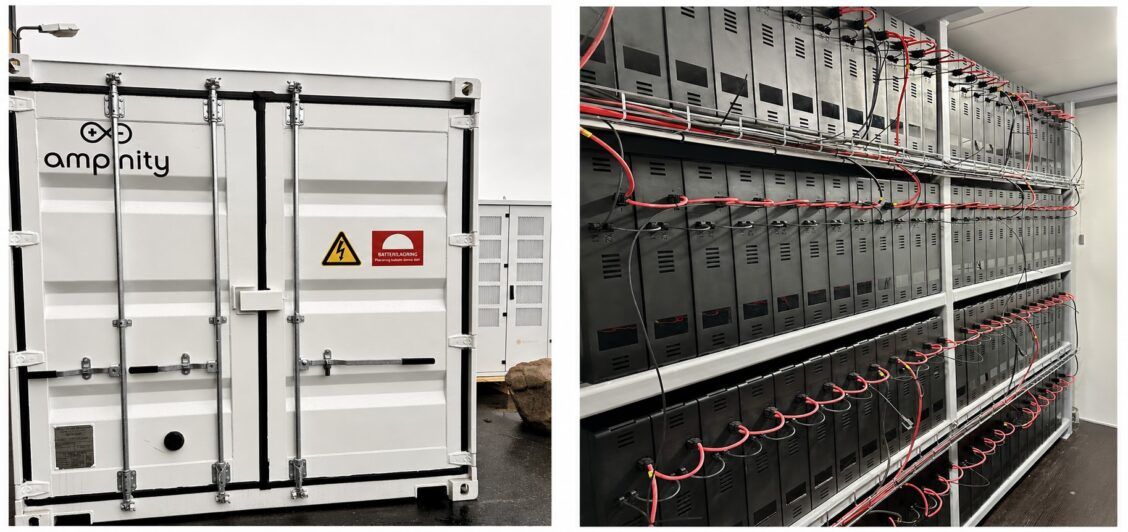
Precendia AB has developed Ampinity™, a Swedish battery energy storage solution built on the principles of circularity. The system uses intelligent software algorithms to monitor, optimize, and control battery performance in real time.
Demand for batteries is increasing rapidly due to global electrification and the transition to sustainable energy. Electric vehicles, solar and wind power, and energy storage systems for both residential and commercial users all rely on efficient battery solutions. Batteries are essential for achieving climate targets, reducing carbon emissions, and enabling the widespread adoption of renewable energy sources. This development creates a strong need for innovation and improved resource management within the battery industry.
The growing demand for batteries highlights the importance of reuse and circular resource flows. By integrating unused batteries (industrial surplus) into the energy ecosystem, Precendia contributes to a more sustainable energy system.
One of the key advantages of Ampinity is that it eliminates the need for additional extraction and processing of raw materials such as lithium, cobalt, and nickel, thereby reducing energy consumption and greenhouse gas emissions. Batteries that still retain full capacity are given a second life before eventually being recycled.
Project
The aim of this project is to conduct a comparative analysis of the environmental and climate impacts of Ampinity’s battery energy storage solution and a comparable system based on newly manufactured batteries. The focus is to investigate the environmental and climate-related benefits that can be achieved through the use of industrial surplus batteries and how this affects resource consumption, energy use, and emissions throughout the product life cycle.
Battery energy storage systems are complex and consist of several hardware components, including batteries, enclosures, inverters, cables, sensors, and embedded computing units. To ensure the project remains feasible, the study will primarily focus on the battery itself and its environmental and climate impacts. Other system components may be included in the analysis to the extent that time and data availability permit.
The project will examine the differences between reused and newly manufactured batteries from a sustainability perspective. The analysis may include aspects such as raw material extraction, energy consumption during production, transportation, the use phase, recycling, and end-of-life waste management. Particular emphasis will be placed on how battery reuse can reduce the demand for critical raw materials such as lithium, cobalt, and nickel, as well as how it can lower climate impacts and support the transition to a more circular economy.
The objective is to develop a robust assessment of the environmental and climate impacts of reused batteries compared with newly manufactured batteries, and to identify the sustainability benefits that Ampinity’s solution can provide in the rapidly growing energy storage market.
The final project scope will be defined in consultation with the academic supervisor and the company. Both the student(s) and the company should be aware that the project must be grounded in relevant academic research and methodology.
Related sustainability goals