
Convert old buildings in Gåsebäck
Client
Helsingborg is one of the fastest growing cities in Sweden. By 2035, the city is expected to have grown by approximately 40,000 new residents. The city must therefore be densified, and more districts must be made attractive into areas to work and live in. This is where the H+ Urban Renewal Project comes into play, which is the largest urban renewal project in Helsingborg in modern times. The name H+ comes from the fact that Helsingborg will add more residents, more companies and also more meeting spots. The H+ area is comprised of the new and existing districts of Oceanhamnen, the University District, the Husar District and Gåsebäck. These will be linked to the city center and the surrounding districts.
An important part of H+ is the old industrial district of Gåsebäck. Previously, there has not been much here other than industries and car repair shops, but by 2035 Gåsebäck will be transformed from an industrial area into a mixed district with housing, businesses and green areas. While much lies in the future, the city has made efforts to increase the well-being of Gåsebäck, including organizing festivals with a street art theme. During the festivals, dull and dark public spaces have been brightened up by graffiti artists' nature-inspired artwork, and Gåsebäck now has one of Sweden's longest graffiti walls.
However, much remains to be done to achieve the city's goal with Gåsebäck: the area should be both greened and beautified so that more people want to and and are able to be there at all hours of the day. How this will be achieved is still uncertain, not least since the city only owns a fraction of the land in the area. But the city has the citizens of Helsingborg to gain help from. An important part of the urban development project in Gåsebäck has since the beginning been to look after those who move and work in the area. By listening to their ideas and needs, the city is assisted in finding the way forward.
Task
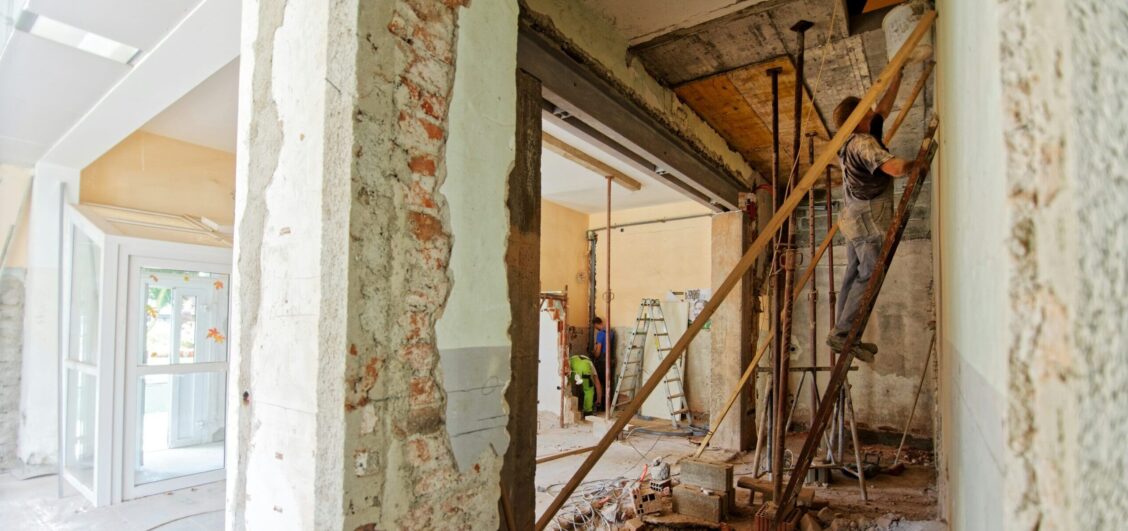
In Gåsebäck there are several old industrial buildings that are not currently being used, or are used very sparingly. As the district is being renewed, new housing and other businesses will be established, and for this, of course, fresh premises are needed. The easiest, cheapest and most accessible option is to demolish the old buildings and build new ones. However, if this happens, the district will lose its old character and cultural values, as buildings are very important for how an area is experienced. Demolishing and rebuilding completely from scratch also has a considerable environmental impact. For these reasons, the management of the urban development project H+ would like the buildings to remain and be renovated/converted instead, if possible.
There are a number of buildings that they would particularly like to preserve. One such building, built in 1952, today houses the Helsingborg Fire Department Museum. The building, which is an old industrial building, has white panels, large windows and high ceilings. It is not difficult to imagine that the building, after interior renovation, could accommodate apartments – yes, maybe even loft apartments. Another old industrial building (probably also dating from the 1950s or earlier) can be found at Kvarnstensgatan 19. Most recently there were offices there and actually also an apartment, but currently the building currently stands. This building also needs to be rebuilt to meet today's housing requirements, while the brick facade, which is characteristic for the area, is to be left in its original condition as much as possible. Apartments could also be built at this address, or perhaps a senior citizen or LSS residence, depending on the conditions of the building. For the city of Helsingborg, it is important to be able to generate income through rental or sale of the properties.
In this project, you will take on one of the properties to investigate whether it is possible to meet current housing requirements, and if you are studying architecture, you will also be asked to come up with proposals for how the building can be designed internally.
In this project, you will be asked to take on one or both of these tasks, depending on your education:
- Investigate what renovation needs the building has in order to meet modern housing standards. This involves everything from windows to insulation and ventilation. How large and time-consuming would the renovation work be, and how much would the total cost approximately be?
- If you are studying architecture - design the building internally to suit private residences or other accommodation. Here you have free rein, perhaps you want to create an interior that is correspondence with the exterior of the building, or break it off with modern design?
The city would also be very thankful for an estimate of how much materials (and greenhouse gas emissions) would be saved by renovating instead of demolishing and building new.
Final delimitations are made in consultation with the university supervisor and the project client. Both the student and the client should be aware that appropriate academic grounding must be applied in the work.
Relevant Sustainability Goals

Emma Brodén
emma@sustainalink.se
0760-345141